
What Most San Antonio Patients Want to Know About Braces Timing
Most patients in the Medical Center District and Oak Hills who are considering braces in San Antonio TX have one question they want answered honestly before they commit. They want to know how long they will be wearing braces, because the answer affects everything from work schedules to social events to sports seasons. The honest answer depends on factors that are different for every patient, and that is exactly what makes a good initial consultation worth the time.
Most orthodontic cases at Fountain of Youth Dental run between 12 and 24 months, with the average patient finishing in around 18 months. That range is wide because the real number depends on how crowded or misaligned your teeth are, what type of braces you choose, your age, and how consistently you follow the treatment plan. Knowing the factors that affect timing helps you set realistic expectations and gives you control over the parts of the process you can actually influence.
How Case Complexity Affects Treatment Time
The single biggest factor that determines how long braces take is the starting condition of your teeth. Mild cases involve small gaps or minor crowding and typically wrap up in 6 to 12 months. Moderate cases with rotated teeth, deeper crowding, or bite issues usually take 12 to 18 months to fully resolve. Severe cases involving significant misalignment, jaw discrepancies, or impacted teeth can extend treatment to 24 months or longer.
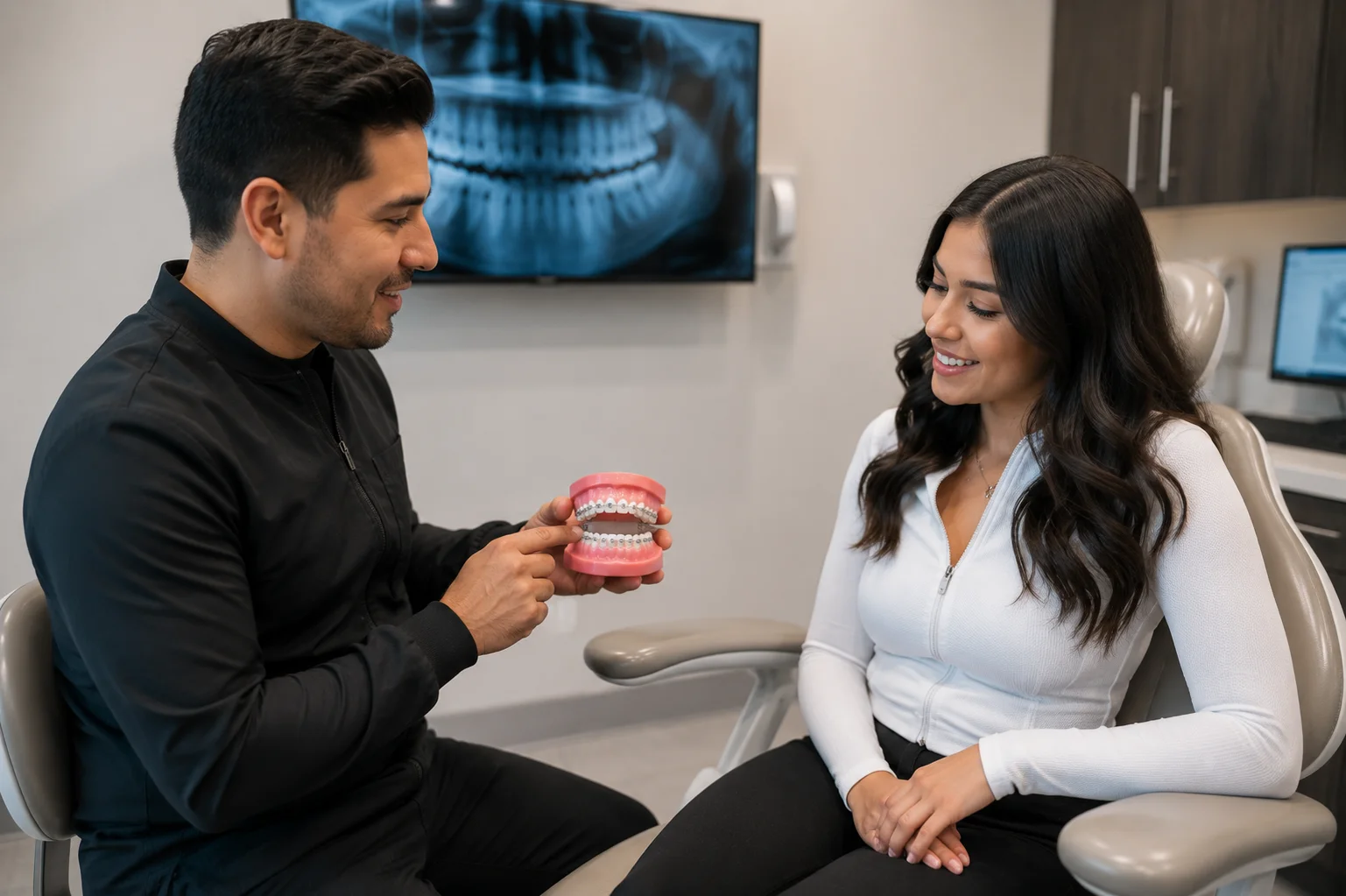
Dr. Chris Cappetta evaluates your starting position during the initial consultation using digital X-rays and full-arch imaging to give you a realistic timeline before treatment begins. That estimate is based on clinical findings, not a generic average pulled from a chart. Patients who understand their case category from the start tend to feel more confident throughout treatment because they know exactly what they signed up for, and they can plan around the overall braces cost in San Antonio with much greater accuracy.
How Treatment Type Changes the Timeline
The braces or aligner system you choose has a real effect on how quickly you finish. Different systems move teeth at different speeds, and some are better suited to certain case types than others. Here is how the major options compare on treatment time:
| Treatment Type | Typical Duration | Best For |
| Traditional Metal Braces | 12 to 24 months | Complex cases, severe crowding |
| Ceramic Braces | 12 to 24 months | Adults wanting discretion |
| Invisalign Aligners | 6 to 18 months | Mild to moderate cases |
| ClearCorrect Aligners | 6 to 18 months | Mild to moderate cases |
Aligner systems like Invisalign and ClearCorrect often finish faster for mild cases because the trays apply consistent force across the full arch at once. Traditional braces remain the gold standard for complex cases because they give the orthodontist more precise control over individual tooth movement. The right choice depends on what your teeth actually need, not which option sounds easiest. Dr. Cappetta walks through both options during your consultation so you can make the decision with full information.
Factors That Can Speed Up Your Treatment
Some patients finish braces noticeably faster than the average, and the reasons usually trace back to specific habits and circumstances. Knowing what helps treatment move quickly gives you a roadmap for staying on the shorter end of your estimated range. These factors tend to shorten total treatment time:
- Wearing rubber bands and other auxiliary appliances exactly as directed
- Keeping every scheduled adjustment appointment without delays
- Following oral hygiene instructions to prevent decay or gum issues that pause treatment
- Avoiding foods that damage brackets or wires and cause repair appointments
- Choosing aligners over braces when your case complexity allows it
- Being a younger patient with bones that respond faster to orthodontic force
Patients who follow these habits consistently can shave weeks or months off their total treatment time. The biggest variable is compliance with rubber bands and aligner wear time. Patients who wear their aligners for the full 22 hours per day finish much faster than those who only wear them for 14 to 16 hours. The work you do at home matters as much as the work done in the chair.
Factors That Can Slow Treatment Down
The same logic works in reverse. Certain situations and habits extend treatment, sometimes adding months to the original estimate. Knowing these factors helps you avoid the most common timeline setbacks. These factors tend to extend total treatment time:
- Missing or rescheduling adjustment appointments frequently
- Breaking brackets, bending wires, or losing aligner trays
- Poor oral hygiene leading to cavities or gum inflammation
- Not wearing rubber bands or aligners for the required hours each day
- Age-related slower bone response in adult patients
- Complex bite issues that require additional procedures partway through
Adult patients should expect treatment to take slightly longer than teenagers because adult bone is denser and responds to orthodontic force more slowly. That difference is usually a few months, not a year. Plan for it from the start rather than being surprised by it. Patients who proactively follow their plan and communicate problems early stay on track even when minor setbacks happen.
Why Age Plays a Role in Braces Timing
Teenagers typically finish braces faster than adults because their jaws and supporting bone are still growing. Active growth means teeth respond to orthodontic force more readily, which translates to shorter overall treatment time. The average teen case at Fountain of Youth Dental finishes in 12 to 18 months.
Adult patients generally take 18 to 24 months for similar cases because adult bone is fully matured and denser. This is not a reason to avoid braces as an adult, since the results are equally permanent and the difference in treatment time is usually only a few months. Dr. Cappetta builds adult timelines around your specific bone density and bite, which is one reason adult patients in San Antonio appreciate the consultation honesty before committing.
What Happens After Active Treatment Ends
Treatment time numbers usually refer to active braces or aligner wear, but the full process includes a retention phase that is just as important. Retainers prevent teeth from drifting back to their original positions and protect the investment you just made. Skipping or losing retainers is the fastest way to undo months of progress.
Most patients wear retainers full-time for the first 3 to 6 months after braces come off, then shift to overnight wear indefinitely. Some patients prefer permanent retainers bonded to the back of the teeth, which require no active effort. Either approach works, and your dentist will recommend the option that fits your bite and lifestyle. Long-term retention is what makes orthodontic results stick.
What Realistic Braces Timing Looks Like at Fountain of Youth Dental
Dr. Christopher Cappetta, DDS, has been guiding patients in San Antonio through orthodontic treatment since 1989, with AGD membership and over 35 years of clinical experience that families across Balcones Heights and Leon Valley trust because he gives honest timelines based on the actual condition of your teeth, not generic estimates pulled from a marketing page. You leave your consultation with a clear understanding of how long your specific case will take, what you can do to stay on track, and what to expect at every stage of treatment.
Whether you are considering Invisalign for a mild case or full braces for a more complex situation, the next step is the same. Visit fountainofyouthdental.com to learn more about our orthodontic options, or call (210) 614-5481 to schedule your consultation and get a realistic timeline built around your smile.
Frequently Asked Questions
Can adults get braces in San Antonio, and how long does it take compared to teenagers?
Yes, adults can absolutely get braces and many do. Adult treatment typically takes 18 to 24 months for similar cases that teenagers complete in 12 to 18 months, because adult bone is fully matured and responds more slowly to orthodontic force. The longer timeline does not affect the quality of the final result, and the American Association of Orthodontists confirms that adult orthodontics is one of the fastest-growing categories in the field.
Are Invisalign aligners always faster than traditional metal braces?
Not always. Invisalign and similar aligner systems often finish faster for mild to moderate cases because the trays apply broad, consistent force across the full arch. However, complex cases involving severe crowding, jaw discrepancies, or rotated teeth often respond better to traditional braces because they give clinicians more precise control over individual tooth movement. The American Dental Association notes that case complexity is the strongest predictor of treatment duration.
What happens if I miss an adjustment appointment during braces treatment?
Missing a single adjustment appointment usually adds 4 to 6 weeks to your overall treatment timeline because each visit is timed to build on the previous one. Frequent missed appointments can extend treatment by months and may also lead to discomfort if wires are not adjusted on schedule. Rescheduling promptly when life happens is the easiest way to stay on track, and most practices including Fountain of Youth Dental offer flexible booking to make consistency easier. The Cleveland Clinic recommends keeping adjustment intervals between 4 and 8 weeks for optimal results.
Do I have to wear a retainer forever after my braces come off?
Most patients wear retainers full-time for the first 3 to 6 months after braces come off, then switch to nighttime-only wear indefinitely. Teeth have natural movement throughout life, so some form of long-term retention is recommended to keep your results stable. Permanent retainers bonded to the back of the teeth are an alternative that requires no active effort and work well for many patients. The American Association of Orthodontists confirms that lifetime retention is the standard recommendation to maintain orthodontic results.
Related Services