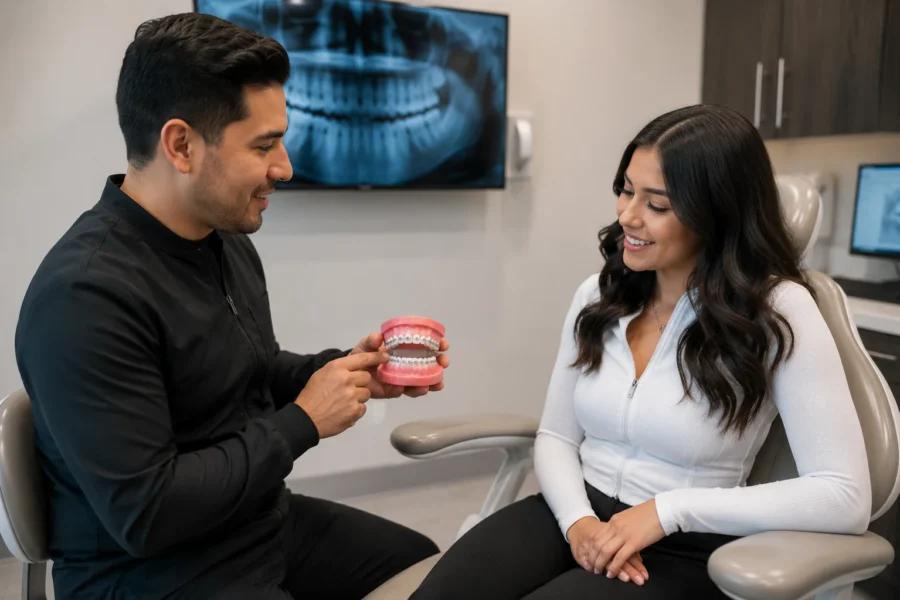

More adults wear braces now than at any point in dental history. Adults make up a growing share of every orthodontic practice today. At Fountain of Youth Dental, Dr. Chris Cappetta, DDS treats working adults across San Antonio. Dr. Cappetta builds each plan around your bite, your schedule, and your goals. Straightening your smile at 30, 40, or 50 delivers lasting results.
Your age shapes your treatment in a few meaningful ways. Adult bone sits denser than a teen’s, so teeth move more slowly. You bring advantages teens rarely have, including discipline and clear goals. Modern braces in San Antonio work around your career, not against it. This guide covers timelines, costs, and the options built for busy adults.
Is it worth getting braces as an adult?
Braces deliver real value for adults, well beyond a straighter smile. Aligned teeth clean more easily, which lowers your risk of decay. Straighter teeth also fight gum disease by removing tight, hard-to-reach gaps. A balanced bite spreads chewing force and reduces jaw strain over time. Many adults gain visible confidence in meetings, interviews, and photos.
Adults pursue treatment for reasons rooted in daily life. Some correct teeth shifted years after childhood braces wore off. Others prepare for a wedding, a promotion, or new dental work. Adults follow instructions closely, which keeps their results stable for decades. Correcting alignment now prevents costlier cosmetic and restorative work later.
Do braces take longer for adults than for teens?
Adult treatment usually runs a few months longer than teen treatment. Teens average 18 to 24 months in braces or aligners. Adults average 22 to 30 months across most standard cases. Complex bites and severe crowding can reach 36 months of treatment. Your timeline depends on your crowding, your bite, and your consistency.
Your decade of life influences your timeline in predictable ways. Patients in their 20s and 30s finish closest to teen timelines. Patients in their 40s and 50s add months from denser bone. Healthy patients in their 60s and 70s still complete treatment every year. An experienced dentist keeps your case efficient with precise, well-planned mechanics.
What type of braces work best for working adults?
The best braces for a working adult depend on your bite and your visibility needs. Clear aligners suit most mild to moderate cases and stay nearly invisible. Metal braces handle the toughest corrections at the lowest price. Ceramic braces offer a discreet middle ground for professionals.
- Lowest price: metal braces move teeth affordably and handle severe crowding.
- Full discretion: lingual braces hide behind your teeth during every meeting.
- Daily flexibility: clear aligners come out for meals, coffee, and presentations.
- Balanced pick: ceramic braces blend with your enamel at a mid-range price.
Start by ranking the tradeoff you care about most. Your top priority points you toward one or two of these options. Weigh price, appearance, and daily habits against your typical work week. Most adults land on aligners or ceramic braces for discretion.
How do the main braces types compare?
The four main types differ on visibility, cost, and best use. The table below sets them next to each other for a quick scan. Read across the row for the option you leaned toward above. These figures reflect current national pricing for adult treatment.
| Braces type | Visibility at work | Typical adult cost | Best for |
| Metal | Most visible | $3,000 to $7,000 | Complex bites, tight budgets |
| Ceramic | Low, tooth-colored | $4,000 to $8,000 | Discretion at a mid price |
| Clear aligners | Nearly invisible | $3,500 to $8,000 | Mild to moderate cases, busy pros |
| Lingual | Hidden behind teeth | $8,000 to $13,000 | Full invisibility, front-facing roles |
The numbers show the tradeoffs, but your work life sets the final call. A surgeon and a sales director face very different visibility demands. Think through your typical week before you commit to an appliance. Cost matters too, so weigh your insurance and payment options.
Which questions decide the right braces for you?
Four questions sharpen your decision before your consultation. Answer each one honestly based on your daily reality. Your responses point clearly toward the right appliance for your life.
- How visible is your role? Client-facing work favors aligners or lingual braces.
- How complex is your bite? Severe crowding often needs fixed metal or ceramic braces.
- How disciplined are you? Aligners demand 20 to 22 hours of daily wear.
- What does your budget allow? Insurance and payment plans widen your real options.
Bring your answers to your consultation for a focused conversation. Dr. Cappetta reviews which options your bite and gum health allow. He then matches the appliance to your work demands and budget. You leave with a clear recommendation built for your daily life.
How do braces change your daily routine?
Adult braces ask for small daily adjustments, not major lifestyle sacrifices. You brush and floss with extra care to protect your teeth. You visit Dr. Cappetta every four to eight weeks for quick adjustments. Clean teeth matter more for adults, since trapped plaque raises gum risk. A few new habits keep your treatment on track and comfortable.
Your speech adapts faster than most adults expect. Clear aligners and lingual braces may add a mild lisp for a few days. Your tongue adjusts quickly, and normal speech returns within a week. Rinse with warm salt water to ease tenderness after each adjustment. Most adults forget their braces entirely within the first two weeks.
Is $5,000 a good price for adult braces?
A price near $5,000 sits right in the normal range for adult braces. The national average for comprehensive braces lands close to $5,000 today. Most metal cases run $3,000 to $7,000 depending on your complexity. Adults often pay $500 to $1,500 more than teens for identical corrections. Denser bone and prior dental work add treatment time and cost.
Your final price depends on case complexity, braces type, and your insurance. Many plans cover part of adult orthodontics through a separate lifetime maximum. Payment plans, HSA funds, and FSA funds spread the balance over time. A fair estimate covers records, adjustments, and retainers, not add-ons later. For your personalized range, review the Invisalign cost guide or dental specials page.
Your straighter smile starts here
Your smile shapes first impressions in every meeting, interview, and photo. Crooked teeth grow harder to clean and correct as the years pass. Waiting lets small alignment issues turn into larger bite problems. Untreated crowding also raises your long-term risk of decay and gum disease. Dr. Chris Cappetta, DDS has straightened adult smiles across San Antonio for years. He holds Texas Dental License #14475 and treats patients at every age.
Your path forward stays simple and clear from the first visit. You book a consultation and review your options with Dr. Cappetta. You receive a plan built around your bite, your budget, and your goals. Straighter teeth and a healthier bite sit within your reach at any age. Patients from Leon Valley, Alamo Heights, Castle Hills, and Shavano Park visit Fountain of Youth Dental. Request your visit today, get directions, and read what patients say.
Frequently asked questions
Can I get braces if I have osteopenia?
In most cases, yes. Osteopenia rarely rules out braces on its own. Dr. Cappetta reviews your bone health and any bone medications before you begin. Some bone drugs slow tooth movement, so he checks your history first. A brief exam and X-rays confirm whether braces suit your situation.
Is there an age limit for adult orthodontic treatment?
No firm age limit applies to healthy teeth and gums. Braces work well for motivated patients in their 60s and 70s. Adults now make up about 1 in 4 orthodontic patients nationwide. Your gum health and bone support decide your options, not your birthday. A full exam confirms whether your foundation can support treatment.
Will braces affect how I speak at work?
Braces affect your speech only briefly at the very start. Clear aligners and lingual braces may cause a mild lisp for a few days. Your tongue adapts fast, and normal speech returns within about a week. Metal and ceramic braces rarely change your speech at all. Most patients notice no lasting effect on their voice or clarity.
Does dental insurance cover the cost of adult braces?
Many dental plans cover part of adult braces through orthodontic benefits. Adult coverage runs smaller than a child’s under most plans. Plans apply a separate lifetime orthodontic maximum, not your annual maximum. Typical orthodontic benefits range from $1,000 to $3,000 in lifetime coverage. HSA funds, FSA funds, and payment plans cover the remaining balance.
Related Services