
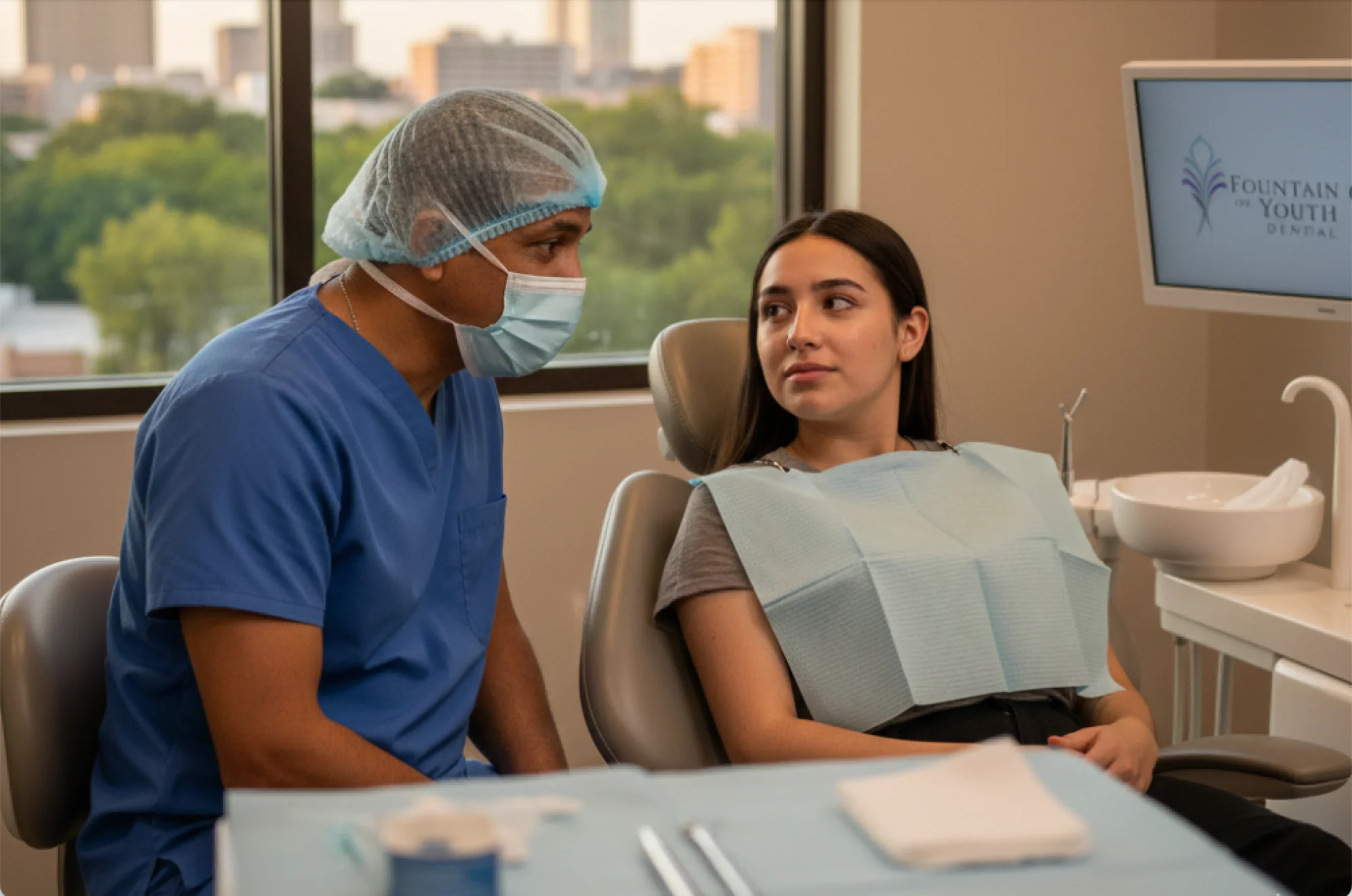
Ever wonder what happens when you need a tooth pulled? Whether it’s a painful wisdom tooth or a decayed molar that’s beyond saving, getting a tooth removed can actually be a relief. In San Antonio, a lot of people are surprised to learn that teeth removal surgery is more common than they think. So let’s talk about what really happens before, during, and after the procedure, and how to make sure your recovery goes smoothly.
At Fountain of Youth Dental, Dr. Chris Cappetta has been doing this for over 35 years. He’s seen it all and knows how to make the process feel easy, even for nervous patients. With his advanced training in laser dentistry, implants, and orthodontics, you’re in good hands. He’s helped people all over the Medical Center District, Oak Hills, and Leon Valley feel better fast, and he can do the same for you.
When Is Teeth Removal the Right Choice?
You might be wondering, “Do I really need to pull this tooth?” That’s a fair question. Sometimes, a tooth is too damaged from decay or an accident. Other times, it’s crowding your other teeth or not coming in straight, like those stubborn wisdom teeth that never seem to behave.
Dr. Cappetta takes a close look using 3D imaging, and he’s not quick to remove a tooth unless it’s truly necessary. But if the damage is bad or there’s a risk of infection, it might be the best move. Wisdom tooth pain, gum swelling, or even that annoying pressure in your jaw are all signals that it’s time to act.
Extractions aren’t just about pain. If you’re getting braces or a dental implant, sometimes removing a tooth is part of the plan. Think of it as making room for something better. Dr. Cappetta always walks patients through the why, so there’s no confusion.
What to Expect During Your Surgery
Feeling nervous? Totally normal. A lot of people get anxious when they hear “surgery,” but honestly, it’s probably not as intense as you’re imagining. At Fountain of Youth Dental, we keep things calm and straightforward. You’ll have options for sedation, like laughing gas or a relaxing pill, and Dr. Cappetta will talk you through it all.
If the tooth is easy to reach, it’s a simple extraction. If it’s stuck under the gums or angled the wrong way, it might need a surgical approach. Either way, we use local numbing so you won’t feel pain, just some pressure.
Once the tooth’s out, we cover the area with gauze and give you clear instructions on what to do next. Most people are surprised at how fast it all goes. With today’s tools and Dr. Cappetta’s gentle touch, it’s really not that bad.
Smart Tips for Post-Surgery Recovery
Let’s talk about healing up. The first couple of days after your tooth is pulled are key. If you follow your instructions, you’ll feel better faster and avoid any annoying complications. Here’s what matters most:
- Take it easy for a day or two. No heavy lifting or intense workouts.
- Use an ice pack. It helps with swelling, 20 minutes on, 20 minutes off.
- Eat soft stuff. Think smoothies, pudding, mashed potatoes.
- Skip the straw. Sucking can mess up healing and cause dry socket.
- Rinse gently. After a day, salt water rinses keep things clean.
Folks from Shavano Park, Alamo Heights, and Balcones Heights often ask how long healing takes. Usually, you’ll feel a lot better in a few days, and the whole area heals in a week or two. You should feel better each day. If not, or if pain spikes or bleeding keeps going, give us a call. Dr. Cappetta always checks in to make sure you’re doing okay.

Wisdom Teeth Removal vs Other Tooth Extractions
Not all extractions are created equal. Pulling a regular tooth is one thing, but wisdom teeth can be a different story. Here’s how they stack up:
| Type of Extraction | Typical Reason | Healing Time | Procedure Type |
| Wisdom Teeth | Impaction, pain, crowding | 1 to 2 weeks | Surgical extraction |
| Decayed Tooth | Severe damage or infection | 1 week | Simple or surgical |
| Orthodontic Extractions | Make room for alignment | 3 to 5 days | Simple extraction |
| Implant Preparation | Non-restorable teeth | 1 week | Surgical extraction |
Wisdom teeth tend to be trickier, harder to reach, deeper roots, sometimes even sideways. That’s why they take longer to heal. Dr. Cappetta uses advanced tools and even laser-assisted techniques to make it smoother. Patients from Castle Hills and French Creek Village often tell us how much easier it was than they expected.
Managing Anxiety About Surgery
A lot of people feel uneasy about dental surgery, and that’s totally okay. Especially if you’ve had a bad experience in the past. People in University Park, Tobin Hill, and other parts of Northwest San Antonio often tell us they’ve put off care because of fear.
Here, we get it. That’s why we offer different levels of sedation, depending on what makes you feel safe. Laughing gas is quick and easy. Oral sedation helps you really relax for longer visits. Dr. Cappetta is certified and has a spotless track record with both.
But more than that, we listen. If something worries you, say so. We’ll take our time, explain what’s happening, and make sure you feel in control every step of the way.
When to Consider Replacing the Removed Tooth
Some teeth, like wisdom teeth, don’t need to be replaced. But others? You might miss them more than you think. Losing a front tooth or one that helps you chew can affect everything from your bite to your confidence.
Here’s what we usually recommend:
- Dental Implants if you want a permanent, natural-feeling solution.
- Bridges if you need a strong, non-removable option.
- Partial Dentures for flexibility if you’re missing multiple teeth.
We’ll talk about what fits your smile, your goals, and your budget. Thanks to CEREC technology and 3D imaging, we can make things look and feel like you never lost a tooth. Folks in Maverick Creek and Dellview especially love how fast we can get them smiling again.
Taking the Next Step Toward a Healthier Smile
Still feeling unsure? That’s okay. If you’ve got pain, swelling, or just that gut feeling something’s not right, it’s time to check in. Teeth removal surgery isn’t scary when you’ve got someone like Dr. Chris Cappetta guiding you through it. At Fountain of Youth Dental, we make it simple, clear, and focused on what’s best for you.
And here’s the thing, we’re not just pulling teeth. We’re helping you move forward. Whether you need a plan for implants, want to stop the pain, or just want someone to explain things without the jargon, we’re here for that. Schedule your visit and let’s figure it out together. Your healthiest smile starts right here.
Frequently Asked Questions
How do I know if I need teeth removal surgery?
Tooth removal (including wisdom teeth) is a big decision. Patients need simple signs to watch for and reassurance that early treatment can prevent more serious problems.
What People Should Be Asking Instead: How do I recognize when a tooth really needs to come out, and why is early evaluation so important?
- Immediate Insight: Swelling, persistent pain, pressure, or repeated infection around a tooth, especially a wisdom tooth, are key warning signs that extraction may be needed, particularly if your dentist has said the tooth cannot be saved.
- Supporting Context: Impacted or severely decayed teeth can damage nearby teeth, bone, or nerves and may lead to cysts or serious infection if left untreated.
- Deeper Implication: Early evaluation and treatment, as emphasized by major dental organizations, reduce surgical complexity, speed recovery, and lower the risk of complications.
Citations:
- Mayo Clinic – Tooth Extraction & Wisdom Tooth Overview:
- American Dental Association – Tooth Extraction
- Wisdom Teeth (MouthHealthy)
What can I eat after my extraction?
Food choices directly affect comfort and healing. The wrong foods can dislodge the clot, trigger pain, or delay recovery.
What People Should Be Asking Instead: What does a safe, healing‑friendly diet look like in the first few days after a tooth extraction?
- Immediate Insight: Choose soft, cool or room‑temperature foods such as yogurt, applesauce, mashed potatoes, scrambled eggs, smoothies (without a straw), and blended soups.
- Supporting Context: Avoid hot, crunchy, hard, spicy, or seedy foods, and skip drinking through a straw, because they can irritate the site or dislodge the blood clot that protects the socket.
- Deeper Implication: Following these diet guidelines lowers your risk of dry socket, keeps pain down, and supports steady healing so you can return to normal eating sooner.
Citations:
- Harvard Health – “Tips for Tooth Extraction Recovery”:
- Cleveland Clinic – “Tooth Extraction: Surgery & Healing”:
What is dry socket and how can I avoid it?
Dry socket is one of the most painful, preventable extraction complications. Patients want to know exactly what causes it and how to avoid it.
What People Should Be Asking Instead: What is dry socket, and what specific habits should I follow or avoid in the first few days after extraction?
- Immediate Insight: Dry socket happens when the protective blood clot at the extraction site dissolves or comes out too early, leaving bone and nerves exposed and causing intense pain.
- Supporting Context: Smoking or vaping, using straws, vigorous rinsing, spitting forcefully, or poking the area with fingers or objects all increase the risk of the clot dislodging.
- Deeper Implication: Gentle oral care, following written aftercare, and avoiding tobacco and suction behaviors for several days significantly reduce your risk and keep healing on track.
Citations:
How long does it take to heal?
Setting realistic expectations about pain and healing time helps patients plan work, activities, and follow‑up visits.
What People Should Be Asking Instead: How long will discomfort and activity limits last, and what do experts say about normal healing timelines after extraction?
- Immediate Insight: Many people feel much better within a few days, with soft‑tissue healing usually well underway in about 1–2 weeks for routine extractions.
- Supporting Context: Swelling and mild pain are most noticeable in the first 24–72 hours, then steadily improve; more complex surgical or wisdom tooth extractions can take longer but follow a similar pattern.
- Deeper Implication: Closely following your dentist’s aftercare instructions, medications, hygiene, diet, and activity restrictions, helps you stay within these expected timelines and lowers the chance of delayed healing or complications.
Citations: