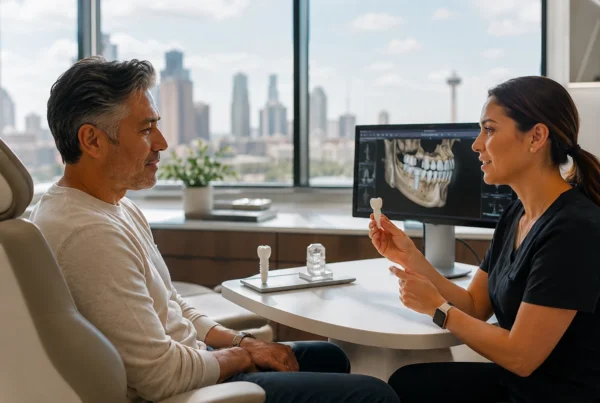
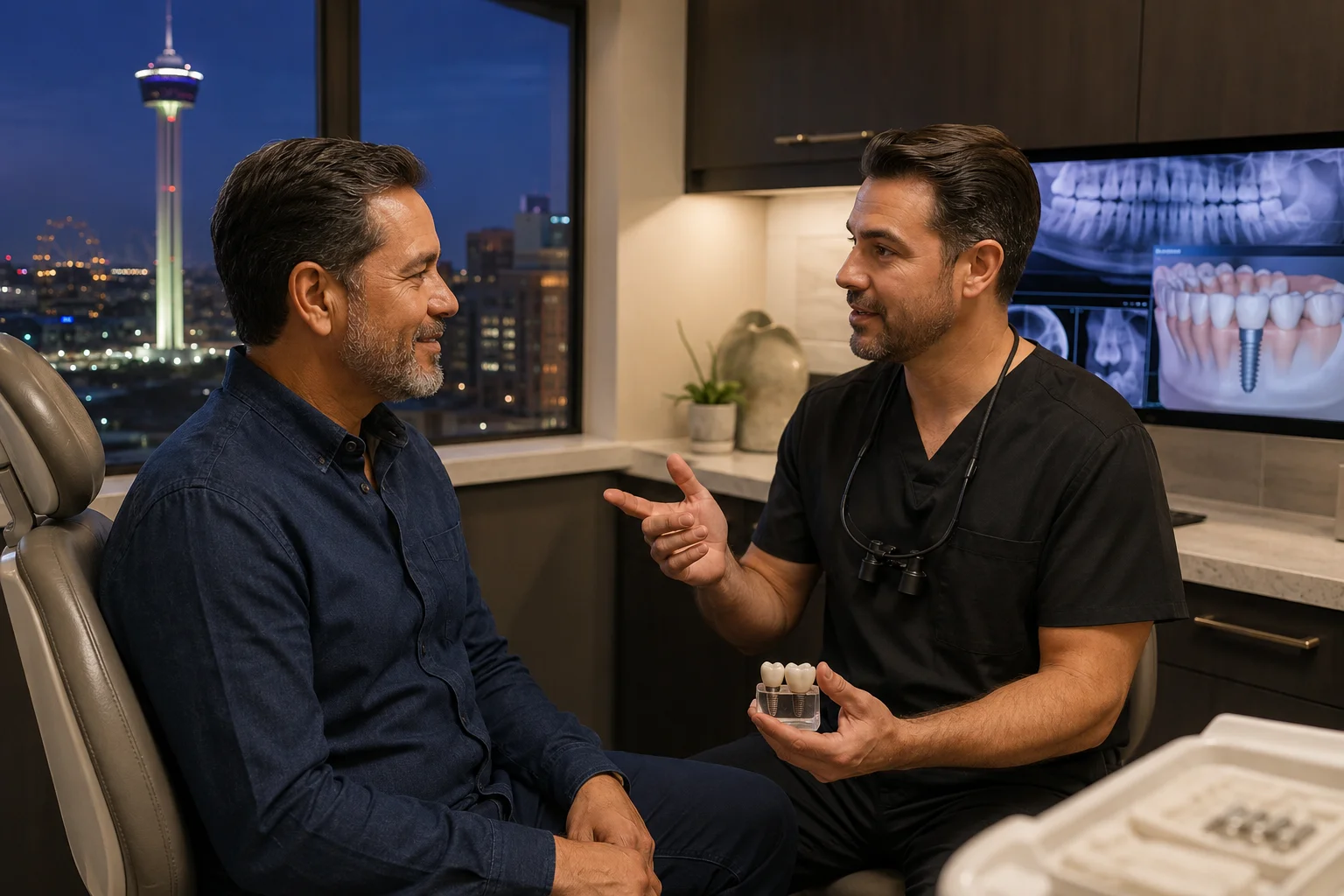
You searched for 24-hour dental implants near me in San Antonio, and you probably have a good reason. Maybe you lost a tooth to trauma or infection. You want to know if there is a faster path than the traditional multi-month process. Same-day implant claims are everywhere online, but the reality is more nuanced than most ads let on. Dr. Chris Cappetta at Fountain of Youth Dental brings over 35 years of implant evaluation experience. His AGD membership and 3D imaging give Medical Center District and Oak Hills patients a real clinical answer. Not a marketing promise.
Same-day implants are a legitimate option for the right patient. They are also genuinely not appropriate for others. Whether you qualify comes down to your bone health, tooth condition, and several clinical factors. Only an imaging-based evaluation can determine that. This guide covers how same-day implants work, who qualifies, what the process looks like, and what recovery involves.
How Same-Day Implants Work
The term 24-hour implant gets used in a lot of different ways depending on who is advertising it. In most cases it refers to immediate implant placement. The implant post goes into the socket on the same day a tooth is extracted. In some cases a temporary crown is also placed that day so you leave with a visible tooth. Those are two different things, and patients who understand the distinction make much better decisions.
Immediate placement skips the traditional waiting period between extraction and implant surgery. Standard protocols have patients wait months for the site to heal before placing the implant. That adds significant time to the overall process. Immediate placement compresses that front end, but it requires specific bone conditions to be done safely.
Who Actually Qualifies for Same-Day Implant Placement?
The process starts before any surgery happens. Dr. Cappetta uses 3D cone beam imaging to evaluate the extraction site in detail. That scan shows bone volume, density, socket shape, and nearby nerve positions. All of that data determines whether immediate placement is clinically appropriate for your case. Here are the clinical factors that determine same-day candidacy:
- Sufficient bone volume and density at the extraction site
- No active infection in the bone surrounding the tooth
- Clean extraction with intact socket walls
- Strong primary stability achieved at time of placement
- Healthy gums and overall good oral hygiene
- No systemic conditions that impair bone healing or immunity
Long-standing infection, significant bone loss, or a complicated extraction often points toward a staged approach instead. That is not a downgrade. Waiting allows the site to heal before the implant is placed, and that path leads to a more predictable long-term outcome.
Same-Day vs Traditional Implant: How They Compare
Choosing between same-day and traditional implants is not just a question of speed. It comes down to candidacy, bone conditions, risk tolerance, and how the timeline fits your life. Understanding both approaches clearly before your consultation puts you in a stronger position. You will be confident in the decision you make. Here is how the two options compare across the factors that come up most:
| Feature | Same-Day Implant | Traditional Implant |
| Placement Timing | Day of extraction | 2 to 6 months after extraction |
| Temporary Tooth | Possible if stability allows | Usually after initial healing |
| Total Timeline | 3 to 6 months to final crown | 6 to 12 months total |
| Bone Loss Risk | Lower due to immediate placement | Higher during healing gap |
| Candidacy Requirements | Strict clinical criteria | Broader eligibility |
| Appointments | Fewer overall | More visits over longer period |
Traditional implants remain the right choice in many cases. Patients who are not same-day candidates are not settling for a lesser outcome. When bone conditions do not support immediate placement, a staged approach consistently delivers excellent long-term results. Dr. Cappetta tells you which path fits your anatomy after reviewing your imaging.

What Recovery Actually Looks Like
Recovery from same-day placement is not dramatically different from a standard extraction. The first 48 to 72 hours bring swelling, mild discomfort, and some bleeding that tapers off quickly. Most patients manage well with over-the-counter pain relief and the clear aftercare instructions Dr. Cappetta provides at the visit. Here is what the recovery period typically involves after same-day placement:
- Soft diet for several weeks to protect the implant site
- Avoiding hard, crunchy, or sticky foods during healing
- Gentle salt water rinsing starting the day after surgery
- No smoking or tobacco use during the healing period
- Follow-up visits to monitor bone integration and implant stability
- Final crown placement after osseointegration is confirmed at 3 to 6 months
The implant takes three to six months to fully fuse with the jawbone regardless of when placement occurred. A same-day procedure shortens the front end of the process. The biological healing timeline does not compress. Patients who understand this going in set realistic expectations and tend to have a better overall experience.
Find Out if Same-Day Placement Is Right for You
You came here because you needed fast answers about a real problem. That is exactly what Dr. Cappetta provides. His 35+ years in restorative dentistry and AGD membership ground every evaluation in real clinical experience. No script, no default recommendation. He does not push same-day placement unless the imaging supports it. He does not talk patients out of it when it genuinely fits their case either.
His 3D imaging gives Leon Valley and Balcones Heights patients a precise clinical picture. No decision gets made without it. Call us at (210) 614-5481 or visit fountainofyouthdental.com to schedule your implant evaluation. Bring your questions. Leave knowing exactly where you stand and what your real options are.
Frequently Asked Questions
Are same-day dental implants safe?
Yes, when performed in well-selected patients by an experienced provider. Research shows that immediate placement achieves success rates comparable to traditional protocols when clinical criteria are met. Patient selection, placement technique, and consistent aftercare all contribute to long-term safety. The American Academy of Implant Dentistry publishes patient resources on implant safety and candidacy requirements.
What happens if I am not a candidate for same-day placement?
A staged traditional approach is recommended, and this is not a downgrade. The tooth is extracted, the site heals, and the implant is placed into a fully recovered bone. This path consistently delivers excellent long-term results. It is often the most predictable route for patients with complex bone conditions. The American Dental Association covers the full range of implant options for patients comparing approaches.
Does a same-day implant hurt more than a traditional implant?
Not significantly. Both procedures use local anesthesia and sedation where appropriate. Most patients find the post-operative experience comparable to a standard extraction. Swelling and soreness in the first 72 hours are normal and manageable with rest and over-the-counter medication. The Cleveland Clinic dental implant resources cover post-operative expectations in plain language.
Can same-day implants fail?
Yes, and understanding the main causes helps you reduce the risk going in. Poor primary stability, undetected infection, and non-compliance with aftercare drive most early failures. Each one is avoidable with the right preparation. Smoking raises failure risk substantially and is one of the clearest contraindications for immediate placement. The Journal of Oral Implantology has published peer-reviewed research on same-day implant failure factors.