
Know Which Guard Your Problem Needs Before You Sleep in One
A snoring mouth guard and a night guard look almost the same, but they do opposite jobs in your mouth. Dr. Chris Cappetta, DDS, has practiced dentistry in San Antonio for more than 35 years. He holds Texas dental license 14475 and screens grinding patients for airway problems as part of his exams. You’ll learn what each guard does and why one can make snoring worse. If you both snore and grind, you’ll also see where our snoring and sleep apnea care fits.
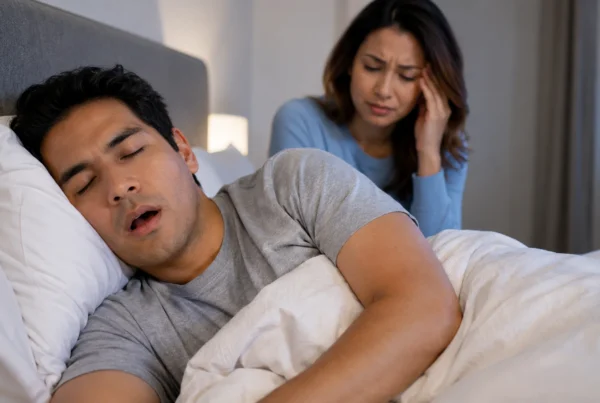
Plenty of people try the guard they already own on their snoring. It seems sensible, since it’s sitting in the drawer and it cost real money. The fear is spending money on another device that doesn’t help. You’re far from the only one who’s tried it. The bigger risk is quieter. The wrong guard can narrow your airway while you sleep, and often nobody notices until a partner hears the pauses.
Can Wearing a Night Guard Stop Snoring?
Usually not, and for some people it makes snoring worse. A 2004 sleep lab study fitted 10 adults with sleep apnea with a flat upper night guard. With the guard in, the share of sleep spent snoring rose by about 40 percent. Breathing pauses also climbed by more than half in 5 of the 10.
The study was small, and the group’s average change wasn’t statistically significant. Even so, NIH clinical guidance now lists sleep apnea as a reason to avoid a flat grinding guard. Researchers think a flat guard props the teeth apart. That can let the lower jaw and tongue settle back toward the throat.
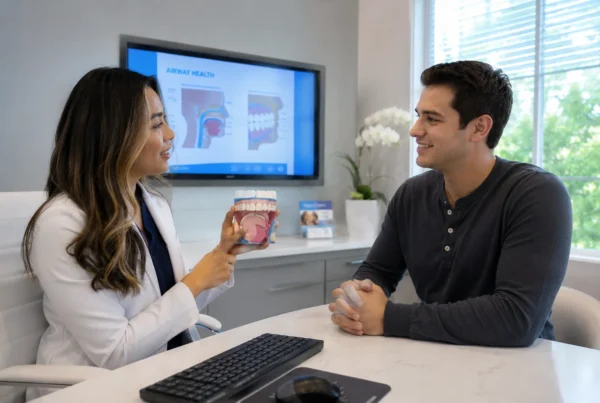
A snoring mouth guard works the other way. It holds the lower jaw slightly forward. That pulls the tongue along with it and opens space at the back of the throat. That’s why two devices can look alike and still have opposite effects on your breathing. A snoring guard still needs a fitting and follow-up, since the forward position can leave the jaw sore at first. Results vary from person to person.
Source: Gagnon Y, et al., “Aggravation of Respiratory Disturbances by the Use of an Occlusal Splint in Apneic Patients: A Pilot Study,” International Journal of Prosthodontics, July 2004. StatPearls, “Bruxism Management,” NIH National Library of Medicine, updated May 2024.
What Is the Difference Between a Snoring Mouth Guard and a Night Guard?
The difference comes down to one thing, jaw position, and it changes what the device does to your breathing. A night guard sits between your teeth with your jaw in its normal resting spot. A snoring mouth guard, called a mandibular advancement device, holds the lower jaw slightly forward all night.
| Night guard | Snoring mouth guard | |
| Main job | Protects teeth from grinding | Keeps the airway open |
| Jaw position | Normal resting position | Held slightly forward |
| Effect on snoring | None, or it can worsen it | Can reduce it |
| With sleep apnea | Flat guards are not recommended | Used for some cases, after a diagnosis |
| Protects teeth from grinding | Yes | Often, yes |
| Who fits it | Your dentist | Usually a dentist, after a sleep evaluation |
Source: StatPearls, “Bruxism Management,” NIH National Library of Medicine, updated May 2024. Gagnon Y, et al., International Journal of Prosthodontics, July 2004.
Drugstore versions of both exist, and each comes with its own tradeoffs. Our guide on how a store-bought snoring mouthpiece can shift your bite covers that side in detail. What matters here is matching the device to the problem before you buy anything at all.
Why Do So Many Snorers Also Grind Their Teeth?
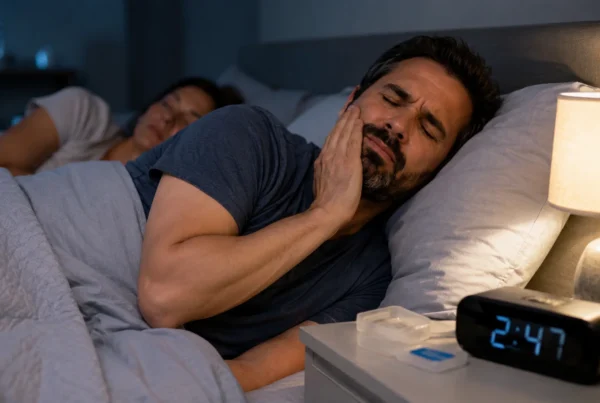
Because the two often share a cause, a narrow airway at night. About half of adults with sleep apnea also grind their teeth, according to research reviewed by the NIH. Dr. Cappetta’s position is that grinding is often the body pushing the jaw forward to hold that airway open. The teeth take the damage for a breathing problem.
That’s why treating only the teeth tends to fail. Fillings keep breaking and crowns keep fracturing, because the reason for the grinding never changed. A guard can protect the teeth while the airway question gets answered. Answering it is what lets the dental work last. It’s a pattern Dr. Cappetta sees in failing dental work again and again.
Source: StatPearls, “Bruxism Management,” NIH National Library of Medicine, updated May 2024.
How Do You Know If Your Grinding Is Tied to Snoring?
A few signs tend to show up together when grinding comes from the airway. Dr. Cappetta looks for six of them, and you can spot several at home with a mirror. None of them is a diagnosis on its own.
- Worn, flattened edges on your front teeth
- Fillings or crowns that keep breaking
- Notches in the teeth near the gumline
- Scalloped edges along the sides of your tongue
- Morning headaches or a tight neck
- Feeling tired but wired, even after a full night in bed
If several sound familiar and someone hears you snore, an airway check belongs before any guard. A sleep study answers the apnea question, and your dentist can read what your teeth show. Together they decide whether you need a night guard, a snoring device, or one that does both. That order saves money and saves teeth.
What If You Can’t Sleep With Anything in Your Mouth?
Some people can’t tolerate a mouth guard at all, and that’s common for snorers with sore jaws. NightLase, a laser treatment for snoring, leaves nothing to wear at night. Dr. Cappetta’s protocol is at least three sessions with no anesthetic, and results typically last about a year. It treats snoring and is not a substitute for sleep apnea care.
- Sleeping on your side instead of your back
- Skipping alcohol in the hours before bed
- Treating nasal congestion from allergies or colds
- Losing weight, if extra weight is part of the picture
- CPAP, when a sleep study confirms moderate or severe apnea
None of these protects teeth from grinding, so heavy grinders may still need a guard. The point is to pick tools that fit both problems, rather than one tool that fights the other. Results vary, and the right mix depends on what’s driving your snoring. A sleep study is the step that sorts out which ones apply to you.
Sleep Quieter Without Trading Away Your Teeth
Dr. Chris Cappetta, DDS, has treated adults in San Antonio for more than 35 years. He holds Texas dental license 14475. He belongs to the American Dental Association, the Academy of General Dentistry, and the Academy of Laser Dentistry. Patients come in from Oak Hills and Shavano Park, often by way of Wurzbach Road. If you don’t drive, the VIA Medical Center Transit Station sits a few doors from the office. The goal is quieter nights and teeth that stop wearing down, though results vary.
Your first step is a conversation, with no obligation to buy anything. There’s no pressure either way. Bring your current guard and anything your partner has noticed at night. Call (210) 614-5481 or request a visit at fountainofyouthdental.com to set up an exam.
What Else Do People Ask About Snoring and Grinding?
Is a night guard better on upper or lower teeth?
Either can work for grinding, and the right one depends on your bite and your dental work. Mayo Clinic notes that guards can be hard or soft and fit over the upper or lower teeth. Comfort, existing crowns, and how your teeth meet all shape the choice. If you also snore, the airway question comes before the upper or lower question.
How do you tell if it’s snoring or sleep apnea?
Listen for what happens between the snores. The National Heart, Lung, and Blood Institute lists breathing that stops and starts as a key sign of sleep apnea. Gasping and loud snoring are on that list too. Daytime sleepiness and morning headaches add to the picture. Only a sleep study can confirm it, so a partner’s description is the best place to start.
Do healthy, fit people snore?
Yes, plenty of them. Cleveland Clinic points to age, nasal congestion, alcohol, back sleeping, and throat shape as common causes. Weight is only one factor among several. A runner with a deviated septum or large tonsils can snore as loudly as anyone.
What vitamin deficiency causes grinding teeth in sleep?
No deficiency has been proven to cause it. A 2023 review of nutrient research on bruxism cited one study where 60 percent of patients had low vitamin D. Only 34 percent of people without bruxism did. Magnesium, iron, and omega-3s have also been linked. The authors call the evidence early, so talk with your physician before taking supplements for grinding.