A snoring mouthpiece is the first thing most people in San Antonio buy about their snoring. Nearly all of them buy it off a shelf. Dr. Chris Cappetta, DDS has practiced dentistry here for more than 35 years. He sees the result of that purchase years later, in bites that no longer meet the way they did. This page covers what both versions do and what changes after a year of wear. It also gives you the findings meaning a mouthpiece is the wrong tool for you.
The worry underneath is a fair one. You want the snoring to stop without spending real money, and you suspect the cheap version is fine. Sometimes it is. Guessing wrong does not cost you the twenty dollars. It costs you a bite that shifted so slowly you never noticed, until a crown stopped fitting.
What Is the Difference Between a Drugstore Mouthpiece and a Custom One?
Two differences matter, and neither is comfort. The first is fit. A boil-and-bite tray takes a rough impression at your kitchen sink, while a custom device is built from a scan. The second is adjustment, since a fitted appliance advances your jaw in measured increments. The shelf version picks one position and holds it.
Both work on the same principle. Hold the lower jaw slightly forward, the tongue follows, and the airway opens behind it. Mayo Clinic lists a jaw-forward mouthpiece among the standard approaches to obstructive sleep apnea. This is real treatment rather than a gadget.
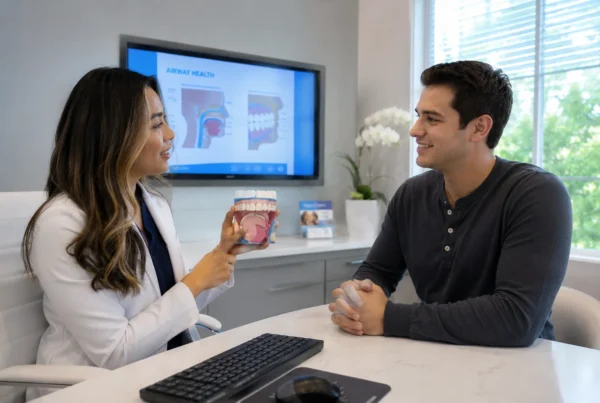
Where they part company is the follow-up. A fitted device comes with appointments to check what it is doing to your teeth. Dr. Cappetta uses CEREC scanning so the starting position is precise rather than approximate. Nobody checks a drugstore device, which is the whole problem.
What Does a Boil-and-Bite Mouthpiece Do to Your Bite Over a Year?
It moves your teeth slowly, because the force is gentle but runs seven hours a night. The device pushes the upper teeth back and the lower teeth forward. Given long enough, your overbite and overjet both shrink. Patients almost never feel this happening, which is why it keeps going.
Long-term research on appliance patients found bite changes measurable on casts. The patients themselves reported nothing unusual, and the changes were progressive. That combination argues for supervision rather than against the treatment.
What Does a Dentist-Fitted Mouthpiece Involve?
Five steps, and only one happens at the first visit. The process takes longer than buying one, and the length is the point. Each step catches something the shelf version cannot.
- An airway examination checking the palate, tongue, tonsils and jaw relationship
- A digital scan rather than a tray you bite into over the sink
- Fabrication by a dental laboratory to that scan
- A fitting visit, then small advancement adjustments over several weeks
- Follow-up appointments watching your bite for the changes above
Patients from Leon Valley and Alamo Heights ask why this cannot happen in one appointment. It can be started in one. The adjustment window turns a device into a treatment. Skip it and you get a mouthpiece doing nothing, or doing too much. Coverage differs by plan, and appliances are sometimes billed under medical benefits.
Drugstore or Custom, Which One Should You Buy?
Six differences decide it, and the answer depends on how long you plan to wear it. For a week of testing whether jaw advancement helps, the cheap one answers that. For nightly use over years, it becomes the expensive choice.
| Drugstore boil-and-bite | Dentist-fitted appliance | |
| Fit | Rough impression at home | Digital scan |
| Jaw position | One fixed setting | Adjusted in increments |
| Bite monitoring | None | Checked at follow-ups |
| Typical lifespan | Months | Years |
| Screening for apnea | None | Airway exam first |
| Best use | Brief trial | Nightly long term |
Results vary with anatomy, severity and how consistently any device gets worn. The last row matters most. A trial device worn as a permanent one is the most common way this goes wrong.

When Is a Mouthpiece the Wrong Tool Entirely?
Seven findings take a mouthpiece off the table. Every one is a reason Dr. Cappetta will say no. Device sellers have no reason to publish this list, since each item is a sale that never happens.
- Untreated moderate or severe apnea without a sleep physician supervising
- Witnessed breathing pauses, choking, or gasping awake at night
- Significant daytime sleepiness or drowsiness behind the wheel
- Existing tenderness in the jaw joint before you wear anything
- Snoring driven mainly by large tonsils or blocked nasal passages
- Collapse at the tongue base rather than the soft palate
- Loose teeth, active gum disease, or too few teeth to anchor a device
The fourth one deserves attention. If your jaw already hurts, a device holding it forward all night is the wrong first move. That pain is worth investigating on its own. Dr. Cappetta’s position is that night-time clenching is often the body opening a narrowed airway rather than a habit.
What Should You Do If You Already Wear One?
Four things, and none requires you to stop tonight. Bring the device to a dental appointment so somebody can see what it is doing. Ask for a bite check, since that is the change you cannot feel. Then find out whether an apnea diagnosis is sitting undone.
That last one carries the real risk. A mouthpiece quiets the noise whether or not you stop breathing at night. It can remove your warning sign while the disorder continues underneath. The snoring and sleep apnea page covers how testing gets coordinated.
Shoppers at Wonderland of the Americas can buy a device on Callaghan Road this afternoon. If your snoring is isolated with no daytime symptoms, that is a reasonable place to start. If any of the seven findings apply, read the anti snoring device guide first.
Keeping Your Bite While You Fix the Snoring
There is a version where the snoring stops and your teeth stay put. You know why you snore, the device matches that reason, and somebody checks your bite twice a year. Dr. Chris Cappetta, DDS has spent more than 35 years in San Antonio doing that kind of follow-up. You see one dentist, a member of the ADA and the Academy of Laser Dentistry, at every visit.
Call Fountain of Youth Dental at (210) 614-5481 to book an evaluation. Bring the device you own and any sleep study you have had. You will leave knowing whether it fits you, though results vary with anatomy and severity. The oral appliance page covers candidacy in more detail.
Questions People Ask About Snoring Mouthpieces
Why does my anti-snoring mouthpiece hurt my jaw?
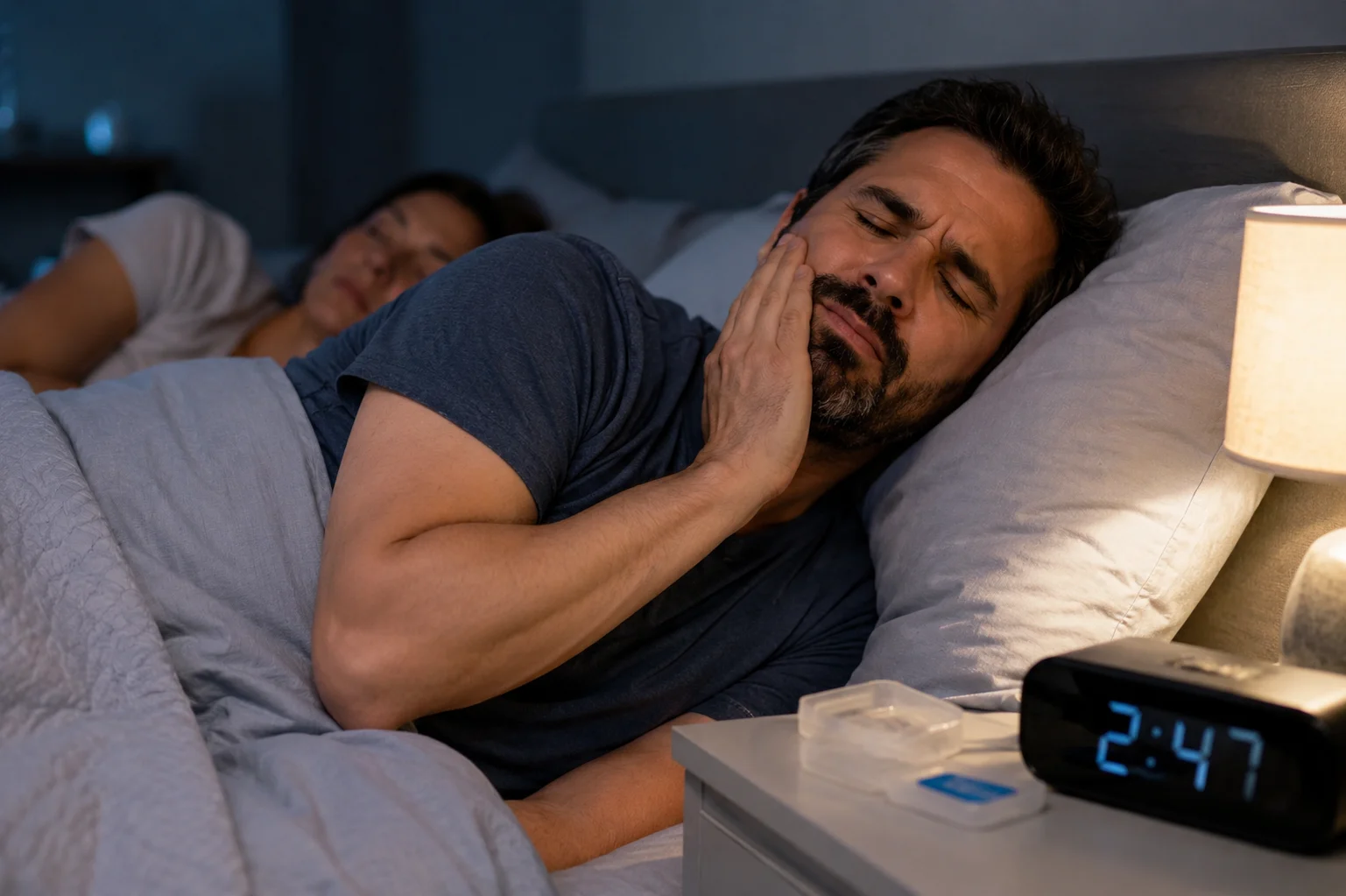
Because the device holds your lower jaw forward for hours. The muscles doing that work are not used to the position. Cleveland Clinic lists pain in the jaw, teeth and temporomandibular joint among the side effects of oral appliance therapy. Morning soreness fading within an hour is common early on. Pain persisting through the day means the advancement needs adjusting rather than tolerating.
Why do my teeth hurt after wearing a snore guard?
The device applies steady pressure to your teeth every night, pushing the upper set back and the lower forward. Soreness is the first sign of that force, and tooth movement is the long version. One study followed appliance patients for a median of nine years. It found measurable changes in overjet, overbite and molar relationship, while the patients noticed nothing. Get the fit checked rather than pushing through.
What is the best mouthpiece to stop snoring?
There is no single best one, since the right device depends on what is closing your airway. A jaw-advancing device does nothing for snoring driven by a blocked nose. A tongue-retaining device suits different anatomy again. Mayo Clinic treats the mouthpiece as one of several approaches in its overview of obstructive sleep apnea. Find the cause first, then match the device to it.
Do anti-snoring mouthpieces actually work?
They work for the right person, and adherence decides more than design does. The Journal of Dental Sleep Medicine published research on adherence and side effects in appliance therapy. Jaw pain and morning discomfort came first. A change in how the teeth met came next. A device you abandon after three weeks treats nothing. Fit and follow-up outrank the brand on the box.