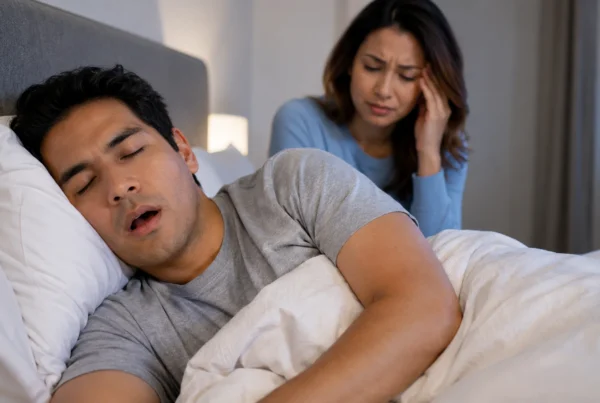
An anti snoring device only works when it matches the reason you snore. Some hold the lower jaw forward, others hold the tongue, and some open the nose. Buying the wrong type is the most common reason people give up on them. At Fountain of Youth Dental in San Antonio, the cause always comes before the product.
Plenty of people have a drawer with two or three devices that did not help. That is money spent and months lost, and it usually happens for one reason. The plan is short: find where the airway narrows, then match the device to it. Dr. Chris Cappetta has 35 plus years practicing dentistry near the Medical Center District. He holds national certification in hard and soft tissue laser treatments. He is also a member of the ADA, the AGD, and the Academy of Laser Dentistry. Patients from Oak Hills and Balcones Heights come to him for a straight answer.
Do Anti Snoring Devices Really Work?
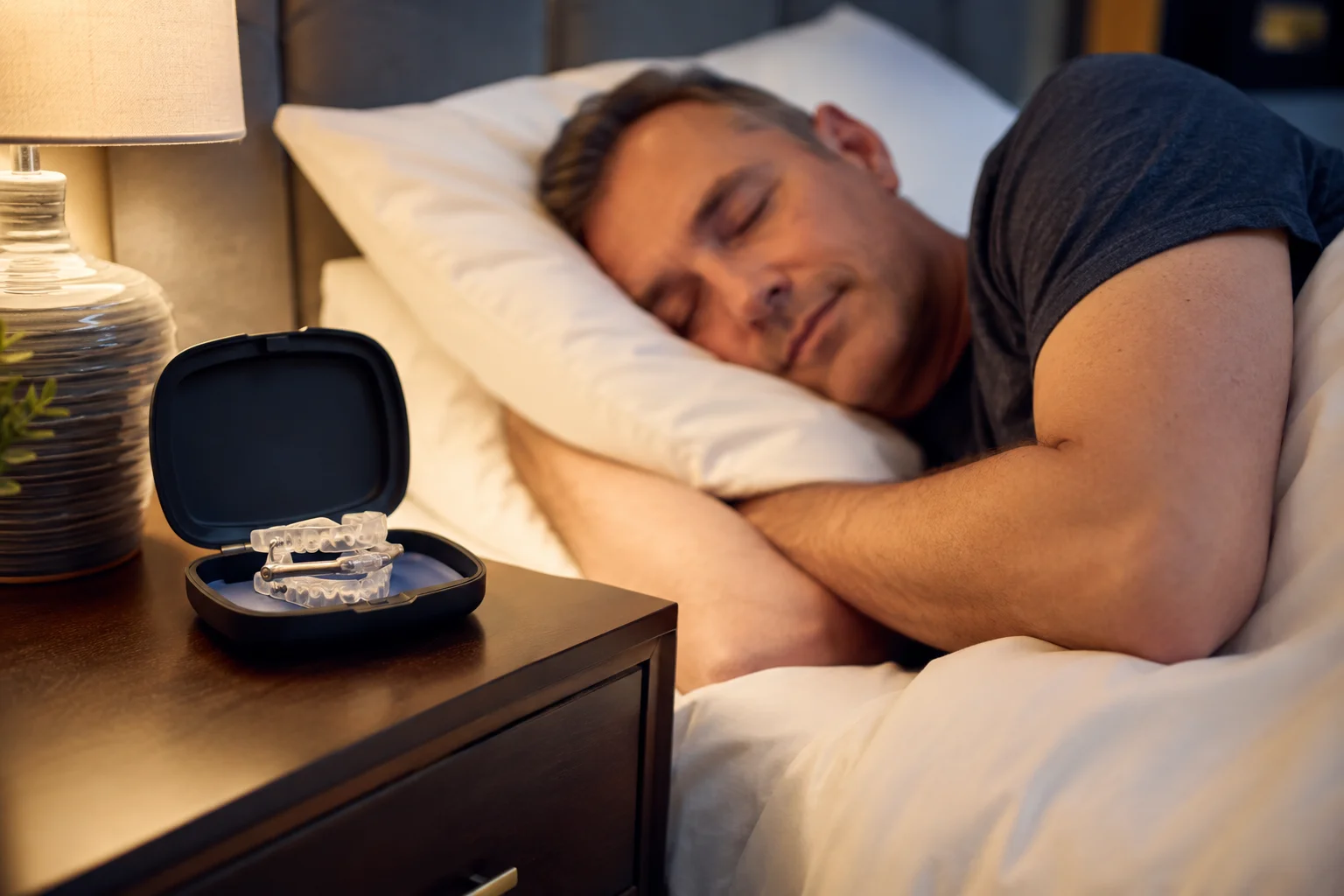
They work for some people, and the type matters far more than the price. Devices that hold the lower jaw forward have the strongest record for snoring. Cleveland Clinic reports that custom made appliances give the best results for sleep apnea. Store versions can quiet simple snoring, though they are not built to your bite. The honest limit is that no device fixes a cause it was never designed for.
A jaw device does nothing for snoring that starts in a blocked nose. That matters in San Antonio more than it does in most other cities. Texas A&M Forest Service reports cedar pollen beginning in mid December and peaking in January. The Ashe junipers west of Interstate 35 release enough pollen to affect almost everyone. Mayo Clinic notes that nasal strips and dilators do not help people with sleep apnea. For diagnosed apnea there are also alternatives to a CPAP machine worth discussing.
What Types of Anti Snoring Devices Are There?
Anti snoring devices fall into a handful of families, and each targets a different spot. Two of them are dental, moving either the lower jaw or the tongue forward. These are known as mandibular advancement and tongue stabilizing devices. The rest work on the nose, the mouth opening, or the position you sleep in. None of them are interchangeable, even though they sit on the same shelf.
- Devices that hold the lower jaw slightly forward
- Devices that hold the tongue forward instead of the jaw
- Nasal strips and dilators that open the nostrils
- Chin straps that keep the mouth closed at night
- Pillows and wearables that discourage sleeping on your back
- Custom appliances made and adjusted by a dentist
Picking a family without knowing your blockage is guesswork with a receipt attached. A snoring evaluation is what turns that guess into an actual decision. Results vary from person to person, and no single type suits everybody.
Should I Buy a Device or Get One From a Dentist?
Buy a store device only if sleep apnea has been ruled out first. A dentist made appliance is scanned to your teeth and adjusted over several visits. Getting one starts with a sleep study, then a referral to a dentist. Most people start with the simplest option and then never revisit the decision. A device that half works quietly becomes the permanent answer, which is the real cost.
| Factor | Store bought device | Dentist fitted appliance |
| Fit | Heated and bitten into shape at home | Made from a scan of your teeth |
| Adjustment | Fixed, or limited to one setting | Adjusted in small steps over several visits |
| Suits | Simple snoring with no apnea signs | Snoring and mild to moderate sleep apnea |
| Oversight | None once you have bought it | Dentist checks fit, jaw comfort and results |
| Diagnosis | Not required, which is the risk | A sleep study comes first |
| Existing dental work | May not seat over crowns or dentures | Planned around the dentistry you have |
This is a comparison rather than a verdict on which one you should choose. Some people do fine with a store device, and there is no shame in trying. Our page on oral appliances for sleep apnea covers the fitted route in detail. If soft palate vibration is the source, laser snoring treatment is another conversation.
Is It Risky to Use an Anti Snoring Device?
The main risk is not the device itself but what the device can hide. Quieting the sound does not fix the breathing that sits behind it. Someone with untreated sleep apnea can feel reassured while nothing has really changed. You can have sleep apnea without snoring at all, which complicates matters further. There are also physical side effects worth knowing about before you start.
- Jaw soreness or tenderness that does not settle down
- Teeth that meet differently when you wake up
- More saliva than usual, or an unusually dry mouth
- Gum irritation where the edges of the device sit
- A device that will not stay in place overnight
- Snoring stops but the daytime tiredness does not
Bite changes and tooth movement are recognised longer term effects of these devices. That is why a fitted appliance comes with follow up visits rather than a receipt. A badly fitting appliance can strain the jaw and trade one problem for another. Sleep apnea testing settles whether the noise was ever the whole story.
Is a Night Guard the Same as an Anti Snoring Device?
No, a night guard protects teeth from grinding and is not a snoring treatment. It is not designed to move the lower jaw forward or open the airway. People often buy one expecting both jobs and end up with only one. The confusion is fair enough, since both sit in the mouth overnight.
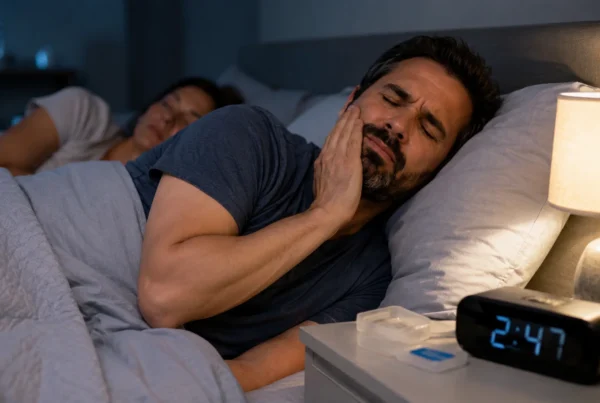
Grinding is often the body reacting to a narrow airway rather than a simple habit. When breathing gets harder at night, the jaw pushes forward to open the throat. Dr. Cappetta looks for worn front edges, cracked teeth, and failing crowns or fillings. He also checks for gumline notching, jaw joint tenderness, and scalloped tongue edges. Guarding the teeth alone leaves the symptoms behind that wear completely untouched.
Not Sure Which Device Fits Your Snoring?
Patients from Castle Hills and Shavano Park come to Fountain of Youth Dental for one thing. They get a straight answer from Dr. Cappetta before anyone recommends a product. His 35 plus years and Texas license 14475 sit behind that approach. Sometimes the honest answer is that a simple device will be enough.
Call Fountain of Youth Dental at 210-614-5481 to book an airway evaluation. You can also request a visit online at fountainofyouthdental.com and hear back quickly. Bring whatever devices you have already tried, including the ones that failed. See our full approach to snoring and sleep apnea treatment in San Antonio.
Frequently Asked Questions
How long does it take to get used to a snoring mouthpiece?
Most people need about two to four weeks to adjust to an oral appliance. Wearing it for a few hours at first and building up makes that easier. Custom fit mouthpieces hold the tongue and soft palate forward to keep the airway open. If discomfort is still there after a month, the fit needs checking rather than patience.
Will an anti snoring device help if I have sleep apnea?
It can help mild to moderate cases, but only after a proper diagnosis. An oral appliance advances the lower jaw and is often more comfortable than CPAP. It is generally less reliable than CPAP at controlling the breathing pauses. Loud snoring is a common symptom of sleep apnea, though the two differ.
Can I use an anti snoring device if I have crowns or dentures?
Existing dental work changes what fits and what is safe to wear overnight. A store device is moulded at home and may not seat over crowns or bridges. A dentist takes an impression or scan and fits the device at a return visit. Working with a dentist to customise the device is what avoids jaw strain.
Do anti snoring devices move your teeth?
They can over time, which is why fitted appliances are monitored by a dentist. Bite changes and tooth movement are uncommon but recognised long term effects. Regular dental visits catch those changes early and allow the device to be adjusted. Snoring that disrupts your sleep is worth raising with a provider either way.